
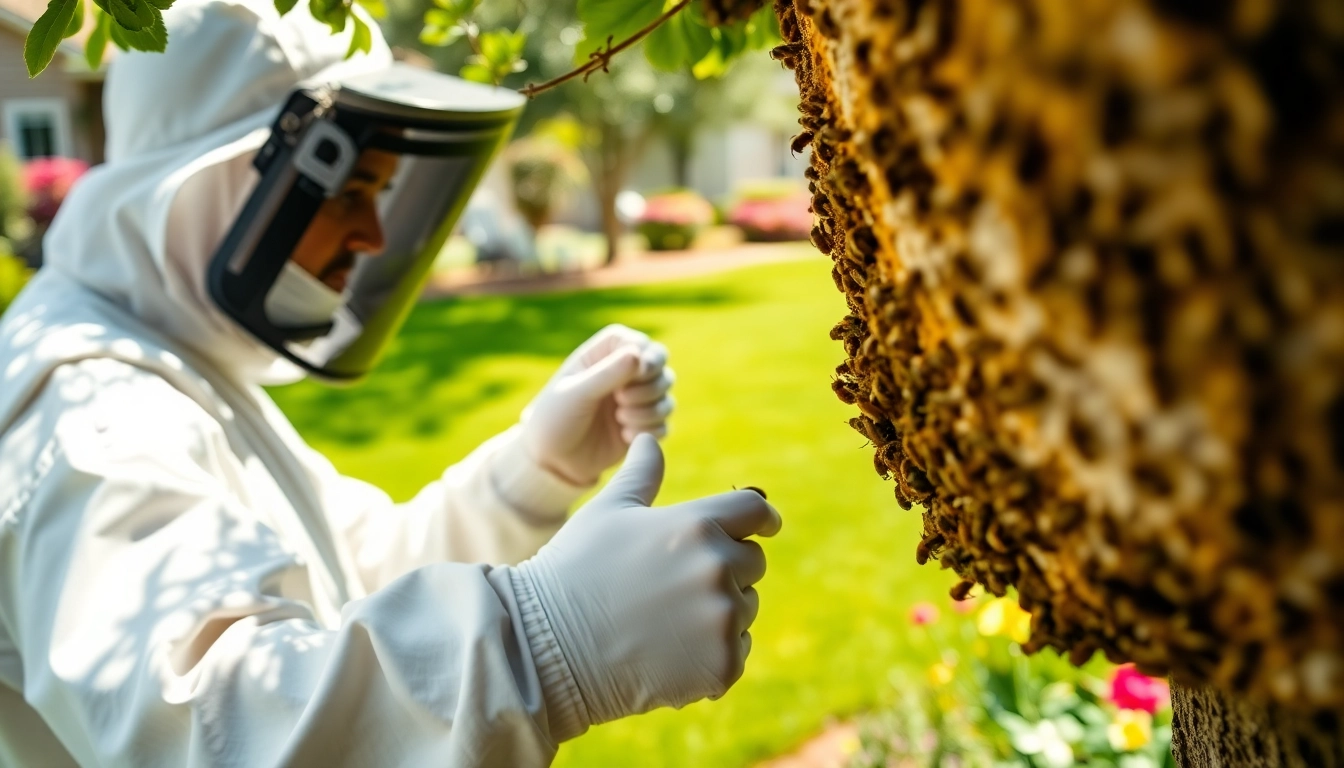
Understanding Bee Removal Service
What is Bee Removal?
Bee removal is the process of safely extracting bees from residential or commercial properties, often performed by trained professionals. These services focus on live removal where feasible, allowing bees to be relocated to safer environments rather than exterminated. This method is crucial for protecting local ecosystems since bees play a vital role in pollination and biodiversity.
Importance of Professional Service
Engaging a bee removal service is essential not only for the safety of occupants but also for the well-being of the bee population. Professionals have the skills and equipment required to handle various types of bees, minimizing the risk of stings and ensuring a thorough, humane removal process. They are trained to identify the specific species present and understand their behavior, which is crucial for choosing the right removal technique.
Types of Bees Commonly Removed
Several species of bees are commonly encountered by removal services. The most notable are:
- Honey Bees: Known for their honey production, they often create large hives in buildings.
- Bumblebees: These are large, fuzzy bees that tend to nest in small cavities, like abandoned rodent burrows.
- Carpenter Bees: Recognizable by their robust bodies, these bees create holes in wood for nesting.
- Africanized Bees: Known for their aggressive behavior, they can pose a significant risk to humans and pets.
Signs You Need a Bee Removal Service
Identifying Bee Hives
Detecting a bee hive is the first step in recognizing the need for professional intervention. Common indications include:
- Increased bee activity around a specific location, particularly near entry points of buildings.
- The presence of honeycomb, which may be visible in areas such as attics or basements.
- Unusual buzzing sounds that indicate a close-by hive.
Recognizing Swarming Behavior
Swarming typically occurs when a bee colony outgrows its space. Signs include:
- Clusters of bees hanging from a tree limb or any structure.
- Clouds of bees flying chaotically around a particular area, especially during warm weather.
- Noticeable changes in bee behavior, where they become more aggressive or defensive.
Health Risks Associated with Bees
Bees can pose health risks, especially for individuals allergic to their stings. Symptoms can range from mild to severe, including:
- Swelling and pain at the sting site.
- Severe allergic reactions, including anaphylaxis, which requires immediate medical attention.
- Potential for multiple stings if bees feel threatened, increasing the likelihood of serious reactions.
Process of Bee Removal Service
Assessment and Inspection
The removal process typically begins with a comprehensive inspection of the property. Technicians will look for signs of bee activity, entry-points, and the extent of the infestation. This assessment helps in determining the best removal strategy.
Safe Removal Techniques
Most professionals use humane methods for bee removal. Common techniques include:
- Vacuum removal, which allows for the gentle extraction of bees.
- Hive relocation, transporting the colony to a suitable location.
- Blocking entry points post-removal to prevent future infestations.
Post-Removal Treatment
After the removal, it’s crucial to ensure no bees return. This may involve:
- Sealing any entry points identified during the inspection.
- Notifying clients about ongoing monitoring and preventive measures.
- Providing education about bee behavior and treatments for any remaining hive remnants.
Cost Factors of Bee Removal Service
Average Pricing Structures
Bee removal costs can vary based on several factors including:
- The type and size of the bee species.
- The location of the hive.
- The complexity of the removal.
On average, homeowners can expect to pay anywhere from $100 to $1,000, depending on these variables.
Additional Charges Explained
Additional charges may include:
- Inspection fees if a thorough examination is necessary.
- Travel costs if the removal service is located far from the job site.
- Post-removal maintenance to ensure no bees return.
Free vs. Paid Services
While some services offer free removal, they often come with limitations such as fewer guarantees or limited follow-up. Paid services typically offer more comprehensive care, including long-term assessments and preventive measures.
Choosing the Right Bee Removal Service
Researching Local Services
Begin by researching local removal services. Look for companies that specialize in humane bee removal, checking for licensed and insured professionals. Customer reviews can also provide valuable insights into their track record.
Checking Credentials and Reviews
It’s essential to verify the credentials of a bee removal service. Look for licenses from relevant state agricultural departments and consumer protection agencies. Also, examine customer reviews to gauge the quality of service offered.
Questions to Ask Before Hiring
Before finalizing a service, consider asking the following questions:
- What methods of removal do you use?
- Are you licensed and insured?
- Can you provide references or testimonials from previous clients?
FAQs About Bee Removal Service
1. Is bee removal safe for the bees?
Yes, professional bee removal services prioritize safe and humane methods that allow for bee relocation whenever possible.
2. How can I tell if I have a bee problem?
Signs include increased bee activity, buzzing noises, and the presence of honeycomb in or around your property.
3. What should I do if I see a swarm?
Stay calm and avoid disturbing the swarm. Contact a local bee removal service to handle the situation safely.
4. Can I remove bees myself?
While DIY methods exist, they can be dangerous. It’s safer to hire professionals equipped to handle bees and minimize risk.
5. What’s the cost of bee removal services?
Costs can range from $100 to $1,000, depending on the service complexity and location of the hive.