
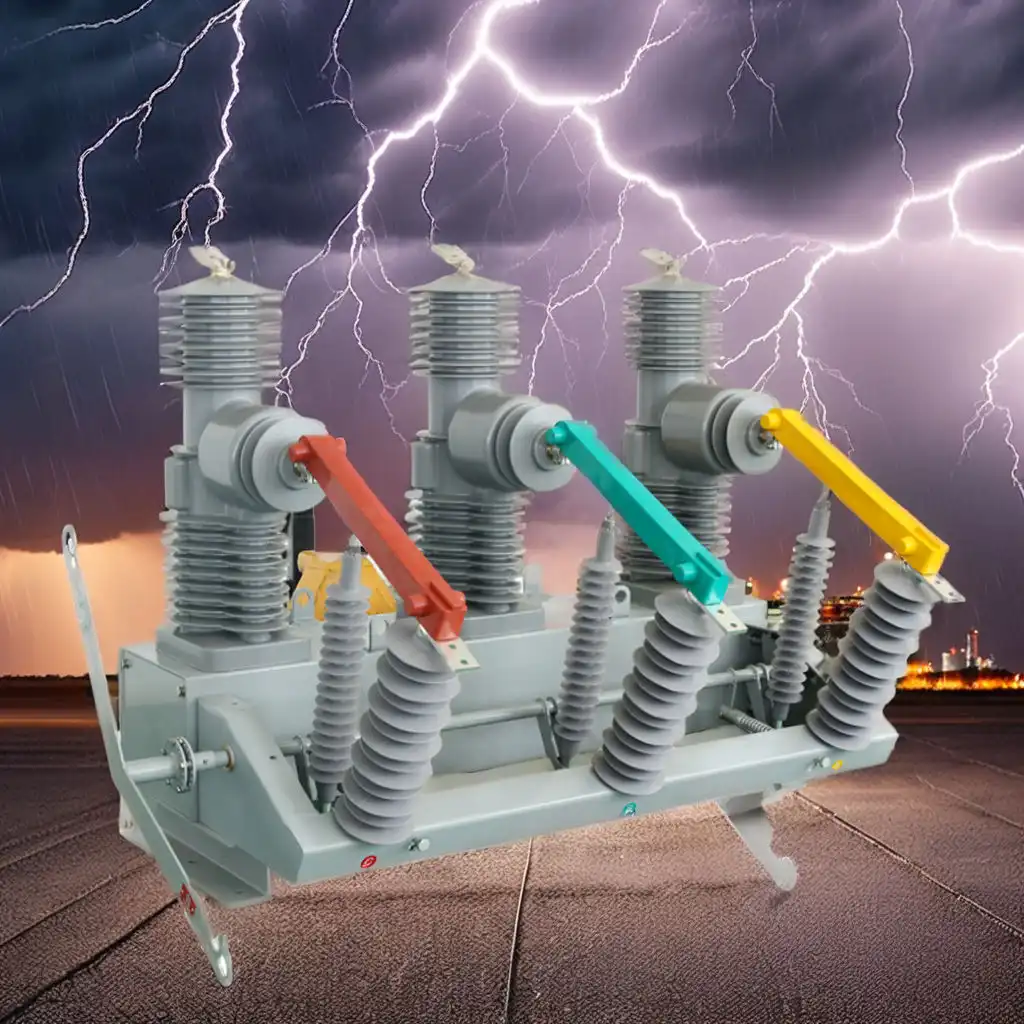
Selecting the right Vacuum circuit breaker is critical for industrial electrical systems. These devices protect equipment from short circuits and overloads while ensuring safe and reliable operation. With numerous types and specifications available, understanding how to choose the right vacuum circuit breaker is essential for engineers, facility managers, and industrial operators.
What is a Vacuum Circuit Breaker?
A vacuum circuit breaker (VCB) is a switch that interrupts electrical flow during faults in medium-voltage systems. Unlike air or oil circuit breakers, a vacuum circuit breaker extinguishes the arc within a vacuum chamber. The vacuum prevents contact oxidation and reduces wear, resulting in longer service life and minimal maintenance.
Key Factors in Vacuum Circuit Breaker Selection
1. Voltage Rating
The voltage rating is the first consideration when choosing a vacuum circuit breaker. Selecting a breaker with an appropriate voltage rating ensures it can safely operate under normal and fault conditions. Most industrial VCBs are designed for medium-voltage applications ranging from 1 kV to 38 kV.
2. Interrupting Capacity
The interrupting capacity defines the maximum fault current the breaker can safely interrupt. For industrial systems, a vacuum circuit breaker must handle high fault currents without damage. Always select a breaker with a margin above the expected fault current to ensure safety and reliability.
3. Mechanical and Electrical Life
A vacuum circuit breaker offers long mechanical and electrical life compared to other breaker types. Mechanical life refers to the number of operations the breaker can perform, while electrical life indicates how many times it can interrupt fault currents. Understanding both is essential for proper selection and long-term performance.
4. Maintenance Requirements
Maintenance is another critical factor. A vacuum circuit breaker requires minimal upkeep due to its sealed vacuum interrupters. Reduced maintenance means lower downtime and operational costs, which is particularly important for industrial facilities operating continuously.
5. Environmental Conditions
Environmental factors such as temperature, humidity, and pollution levels influence vacuum circuit breaker performance. Choose a breaker designed to operate reliably under your facility’s specific conditions, ensuring consistent protection for electrical equipment.
Benefits of Choosing the Right Vacuum Circuit Breaker
Selecting an appropriate vacuum circuit breaker offers several advantages. It provides rapid fault interruption, long operational life, compact design, and environmental safety. Industrial operators also benefit from reduced maintenance costs and enhanced system reliability.
Applications of Vacuum Circuit Breakers
A vacuum circuit breaker is widely used in industrial plants, power distribution networks, and commercial buildings. It is ideal for motor control centers, transformers, and switchgear systems. By selecting the right vacuum circuit breaker, industries can ensure efficient power management and equipment protection.
Conclusion
Choosing the right vacuum circuit breaker is essential for reliable and safe industrial operations. By considering voltage rating, interrupting capacity, mechanical life, maintenance requirements, and environmental conditions, you can select a VCB that meets your facility’s needs. With the correct vacuum circuit breaker, industrial systems achieve maximum safety, efficiency, and durability.