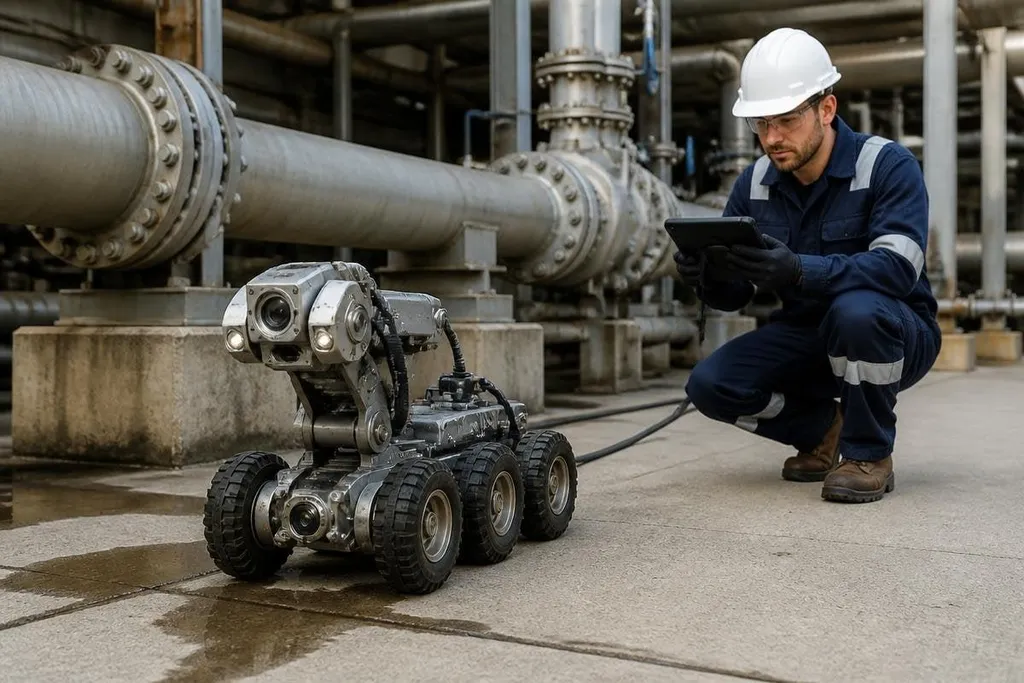
An inspection robot can spot a damaged pipe, read a gauge, or check a hard-to-reach space. New inspection systems will have to show that they can repeat those tasks safely, record useful evidence, and fit the work already done by human teams.
- Useful output: clear images, readings, or measurements tied to a location
- Safe operation: controlled movement near people, equipment, and live systems
- Worksite fit: enough battery, access, and network range for the assigned route
The robot has to see the right thing
Inspection starts with sensing. Inspection robots may use cameras for visible damage, thermal sensors for heat changes, or LiDAR to measure distance and shape. Each sensor answers a different question, so the system needs a clear reason for carrying it.
A sharp image alone doesn't prove much. The software must show where the image came from, when it was taken, and what part of the asset it shows. That record lets a technician compare the same valve, weld, or panel during later checks.
Location matters because inspection work often compares change over time. Following the same route and pointing sensors at the same area can make those comparisons easier. If its position drifts, a small crack may look like a new fault when the camera is simply looking from a different angle.
Autonomy has to stop at the right time
An autonomous system can plan movement from sensor readings and avoid obstacles without a remote operator guiding each turn. That helps when the route is long or the area is difficult to enter, but the robot still needs clear limits.
A good system should stop when a sensor becomes uncertain, a person enters its path, or its route no longer matches the site map. It should show the reason for the stop and wait for a person to decide what happens next.
This handoff is part of the design, not a failure of autonomy. A technician may need to approve a closer scan, change the route, or remove the robot from an unsafe area. The control screen should make those actions clear without hiding the original sensor data.
Inspection results need more than a clean pass in a short video. A dated report from Robot24.com can put the robot, test site, route, sensor data, and repeat runs beside the claim. Those details show whether the system can support a technician at a working facility.
The hard part is fitting the inspection process
Most inspection teams already have steps for reporting faults, assigning repairs, and storing records. A robot becomes useful when its data can enter that process without forcing people to rebuild it around the machine.
The output should connect an image or measurement to an asset name, location, time, and finding. It should also keep the original file available for review.
A summary can save time, but the person making a repair decision may need to check the source image.
The robot's physical design matters too. A tracked system may suit a flat floor, while a legged system may reach stairs or uneven ground. A flying robot can inspect overhead structures, but its flight time, wind limits, and rules for indoor operation shape where it can work.
Those details decide the purchase. A machine that reaches a narrow space but needs a person beside it for every metre may fit a short, high-risk check. It may not fit a large site that needs repeated routes each day.
What is still unproven
Inspection makers can show a robot moving through a site. The harder proof is a full record from a repeat task, including missed areas, false alarms, stops, operator actions, and repair decisions that followed.
I’d skip any system whose maker shows only clean demo footage and no inspection record. The buyer needs evidence from the task itself, with enough detail to judge the cost of missed faults and extra reviews.
Before you approve a trial, check these points:
- Name the fault: set the exact defect or reading the robot must find.
- Fix the route: mark entry points, stairs, blocked areas, and places where people work.
- Set the handoff: decide when a technician takes control and what data they receive.
- Keep the record: require time, location, sensor type, and original files for each finding.
- Count the work: measure completed checks, missed areas, false alarms, and human review time.
A useful trial can start small. Pick one repeat inspection, set the pass conditions before the robot arrives, and compare its record with the team's normal method.
A new inspection system earns its place when that record supports a better maintenance decision, not when the robot completes a smooth route.