
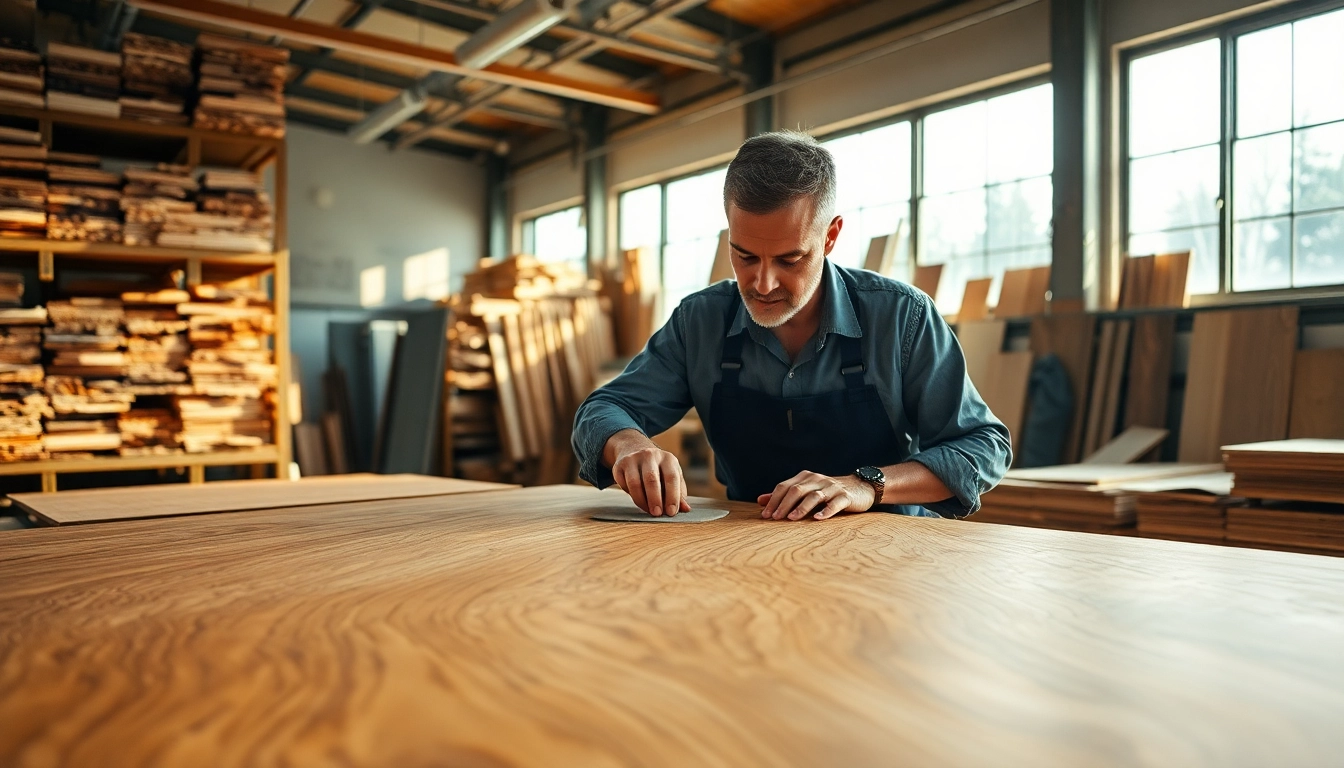
Understanding Wood Veneer
What is Wood Veneer?
Wood veneer is a thin layer or slice of wood, usually thinner than 3mm, that is obtained from a log or tree and is used in various applications, predominantly in woodworking. Unlike solid wood, which is more costly and may require extensive processing, wood veneer offers a cost-efficient alternative while still providing the rich aesthetics of natural wood. This versatile material can enhance the look of many surfaces while minimizing the use of natural resources. For those interested in sustainability and design, wood veneer provides an attractive option that balances elegance and practicality.
Types of Wood Veneer
The types of wood veneer can typically be categorized into several classifications based on species, cuts, and intended applications. Common species include oak, walnut, cherry, and maple, each offering unique colors and grain patterns. Veneers can also be classified by their cuts:
- Rotary Cut: This method involves spinning the log against a knife, resulting in a wide, continuous sheet. It is often used for plywood.
- Sliced Cut: This method, which includes plain (or flat) slicing, quarter slicing, and rift cutting, creates veneers with more pronounced grain patterns, ideal for high-end furniture.
- Backed Veneer: A thin wood layer bonded with a substrate material to add strength and prevent cracking during application.
How Wood Veneer is Made
The process of creating wood veneer is a delicate blend of artistry and technology. The procedure usually follows these steps:
- Log Selection: High-quality logs are selected based on desired species and grain pattern.
- Debarking and Cutting: The logs are debarked and cut into manageable sections.
- Softening: Logs are often softened through steaming or boiling to facilitate cleaner cutting.
- Veneering: Depending on the cutting method, layers are sliced to the specified thickness.
- Drying: The veneer is then dried to eliminate excess moisture, which can affect adhesion.
- Finishing: Finally, veneers may undergo treatments to enhance preservation before being packaged for sale.
Benefits of Using Wood Veneer
Cost-Effective Material
One of the most significant advantages of wood veneer is its cost-effectiveness. Solid wood can be prohibitively expensive, especially for high-quality species. Wood veneer allows manufacturers and consumers to utilize the same aesthetic appeal of solid wood without the associated costs, making it a viable option for both furniture creators and homeowners.
Environmental Sustainability
Wood veneer can promote sustainability efforts as it utilizes fewer natural resources than solid wood. By using veneers to cover substrates, manufacturers can produce more products with a single log. This method significantly decreases deforestation rates and helps in preserving valuable tree species, aligning with modern eco-friendly practices.
Aesthetic Appeal in Design
The visual appeal of wood veneer is unmatched. With an array of colors, textures, and grain patterns available, it can replicate the appearance of solid wood while providing versatility in design. Whether used in contemporary or traditional settings, wood veneer can infuse spaces with warmth and elegance, making it a favorite among interior designers.
Applications of Wood Veneer
Furniture and Cabinetry
Wood veneer finds extensive use in furniture and cabinetry. It is particularly popular in the production of tables, chairs, cabinets, and shelves. What makes veneer especially advantageous is its ability to cover surfaces uniformly, reducing the visual seam lines that often come with solid wood. Furthermore, a range of stains and finishes applied to veneer allows for customization to match any interior décor.
Interior Wall Paneling
Wood veneer can also serve as a stunning solution for interior wall paneling. It provides a sophisticated touch to living rooms, dining areas, and office spaces. With various installation methods, such as glue-up or paneling systems, veneer can create a visually striking feature wall while enhancing acoustic properties and reducing echo in larger rooms.
Artistic Projects and Décor
In addition to functional uses, wood veneer is popular in artistic projects, including custom artwork and intricate wood crafts. Artists appreciate veneer for its ability to be easily shaped and manipulated, allowing for creativity and innovation in woodworking projects. Homeowners can incorporate veneer in décor items like picture frames, wall art, and home accessories to elevate their aesthetic appeal.
How to Care for Wood Veneer
Cleaning and Maintenance Tips
Maintaining the appeal of wood veneer goes beyond initial installation. Regular care is essential:
- Dust Regularly: Use a soft, dry microfiber cloth to dust veneer surfaces.
- Use Mild Cleaners: For deeper cleaning, opt for gentle cleaners specifically designed for wood surfaces, avoiding abrasive pads.
- Avoid Excess Moisture: Excess water can damage veneer; therefore, wipe spills promptly.
Protective Finishes
Applying protective finishes can significantly enhance the longevity of wood veneer. Common finishes include varnishes, oils, and lacquers that not only protect against wear but also enhance the natural beauty of the wood.
Dealing with Damage
Occasional scratches or dents in wood veneer are inevitable. To repair minor damage:
- For scratches, a wood touch-up marker can help conceal imperfections.
- To address deeper gouges, filling with wood filler and sanding smooth may be necessary before reapplying finish.
FAQs about Wood Veneer
What is the lifespan of wood veneer?
The lifespan of wood veneer varies based on usage and care but can last decades if maintained properly.
Can wood veneer be refinished?
Yes, wood veneer can be refinished, but care must be taken to not sand through the veneer layer.
Is wood veneer environmentally friendly?
Wood veneer is environmentally friendly as it uses less wood compared to solid lumber, supporting sustainable practices.
How do I choose the right wood veneer?
Choosing the right wood veneer involves consideration of appearance, grain patterns, and the specific application for best results.
What are common uses for wood veneer?
Common uses include furniture, cabinetry, wall paneling, and artistic projects, showcasing its versatility in design.
