

Driving more traffic to a website does not automatically result in more revenue. Many businesses invest heavily in SEO, paid advertising and content marketing only to discover that visitors leave without taking action. Effective conversion optimization services focus on understanding user behavior, identifying friction points and improving the customer journey to increase conversions. By leveraging data and testing methodologies, businesses can generate more leads, sales and revenue without necessarily increasing traffic acquisition costs. Different optimization frameworks contribute to revenue growth in unique ways, making it important to understand their strengths and limitations before implementing a conversion strategy.
Image source: pexels.com
User Behavior Analysis Strategy
User behavior analysis focuses on understanding how visitors interact with a website through heatmaps, click tracking, session recordings and navigation patterns. This framework helps businesses identify obstacles that prevent users from completing desired actions.
The primary advantage is visibility into real user behavior. Rather than relying on assumptions, businesses can observe how visitors engage with content, forms and calls to action. This often reveals opportunities that traditional analytics platforms may overlook.
According to Matt Bowman of Thrive Agency, businesses frequently uncover significant conversion opportunities when they analyze how users actually interact with their websites instead of relying solely on traffic metrics. Understanding visitor behavior provides a stronger foundation for optimization decisions and revenue growth.
The limitation is interpretation complexity. User behavior data can be extensive, and incorrect conclusions may lead to ineffective optimization efforts. Businesses often require expertise to transform behavioral insights into meaningful improvements.
A/B Testing Strategy
A/B testing compares two variations of a webpage element to determine which version performs better. Common testing areas include headlines, calls to action, page layouts, forms and visual assets.
The strongest advantage is data-driven decision-making. Businesses can validate changes using real user interactions rather than opinions or assumptions. Successful tests often generate incremental improvements that compound over time.
The challenge is statistical significance. Reliable testing requires sufficient traffic volume and proper experiment design. Low-traffic websites may struggle to gather enough data to reach meaningful conclusions quickly.
Landing Page Optimization Strategy
Landing page optimization focuses on improving pages specifically designed to convert visitors into leads or customers. This strategy emphasizes messaging clarity, visual hierarchy, trust elements and conversion-focused layouts.
One significant advantage is direct revenue impact. Landing pages often represent the final step before conversion, making improvements highly influential. Small adjustments to page design and messaging can produce measurable gains in lead generation and sales.
The downside is ongoing maintenance. User preferences and competitive conditions change over time, requiring continuous refinement. Businesses that stop optimizing may eventually experience declining conversion performance.
Personalization Strategy
Personalization uses behavioral, demographic or traffic-source data to customize experiences for individual users or audience segments. Personalized content aims to increase relevance and engagement.
The primary benefit is improved user alignment. Visitors are more likely to respond positively when content reflects their interests, needs and stage within the buying journey. Personalized experiences often increase engagement and conversion rates simultaneously.
The limitation is implementation complexity. Effective personalization requires audience segmentation, data infrastructure and ongoing management. Businesses must also balance personalization efforts with privacy and compliance considerations.
Form Optimization Strategy
Form optimization focuses on improving lead capture forms, checkout experiences and inquiry processes. This framework seeks to reduce friction while maximizing completion rates.
The major advantage is immediate conversion improvement. Simplified forms and streamlined processes often increase the number of users who complete desired actions. Form optimization can generate measurable results without major website redesigns.
The challenge is balancing lead quality with convenience. Shorter forms may improve completion rates but provide less information about prospects. Businesses must determine the appropriate balance based on sales and marketing objectives.
Customer Journey Optimization Strategy
Customer journey optimization evaluates the complete path users take before converting. This strategy examines touchpoints across websites, content assets, emails and marketing campaigns to identify opportunities for improvement.
The strongest advantage is comprehensive insight. Rather than optimizing isolated pages, businesses can address friction throughout the entire customer experience. This often leads to more sustainable and scalable conversion improvements.
The downside is complexity. Customer journeys frequently involve multiple channels and interactions, making analysis and implementation more challenging than single-page optimization efforts.
Conversion Optimization Strategy Impact Comparison
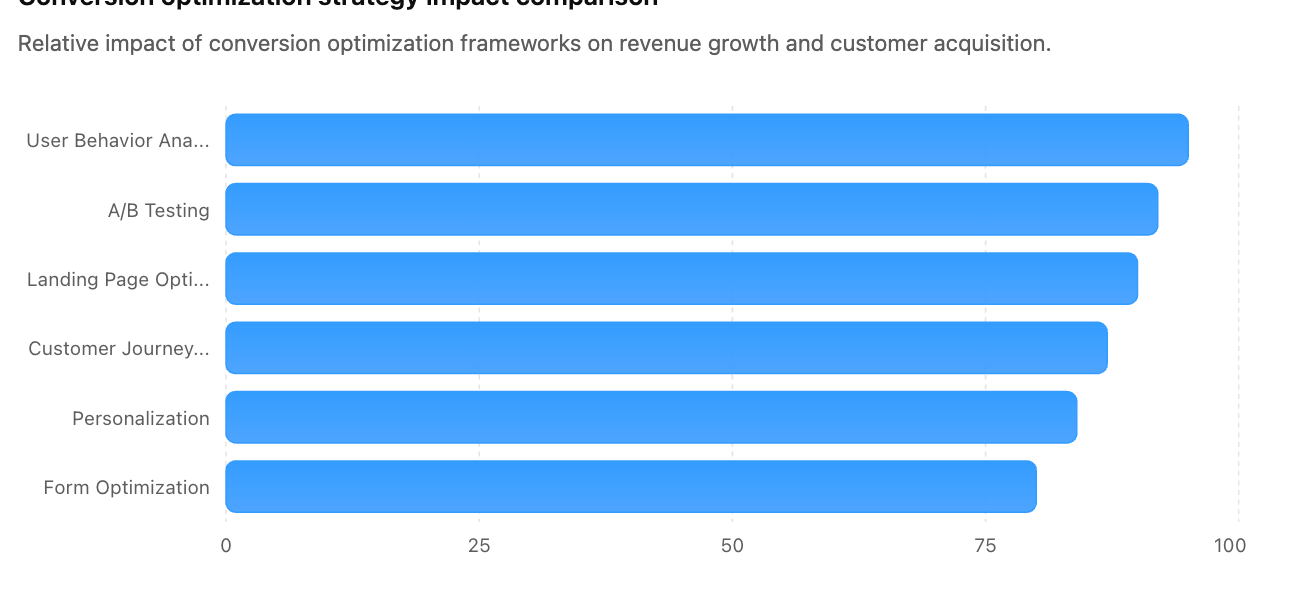
COMPARISON SUMMARY
━━━━━━━━━━━━━━━━━━━━━━━━━━
USER BEHAVIOR ANALYSIS
Strengths
Provides direct insight into how visitors interact with websites.
Benefits
Identifies friction points and uncovers hidden conversion opportunities.
Weaknesses
Requires expertise to interpret behavioral data accurately.
━━━━━━━━━━━━━━━━━━━━━━━━━━
A/B TESTING
Strengths
Validates optimization decisions through measurable experimentation.
Benefits
Supports continuous improvement and evidence-based decision-making.
Weaknesses
Requires sufficient traffic and proper testing methodology.
━━━━━━━━━━━━━━━━━━━━━━━━━━
LANDING PAGE OPTIMIZATION
Strengths
Directly improves key conversion-focused pages.
Benefits
Generates measurable increases in leads and revenue.
Weaknesses
Requires ongoing refinement as user behavior evolves.
━━━━━━━━━━━━━━━━━━━━━━━━━━
PERSONALIZATION
Strengths
Creates highly relevant user experiences.
Benefits
Improves engagement and conversion performance.
Weaknesses
Implementation can be resource-intensive and technically complex.
━━━━━━━━━━━━━━━━━━━━━━━━━━
FORM OPTIMIZATION
Strengths
Reduces friction within lead generation and checkout processes.
Benefits
Improves completion rates and conversion efficiency.
Weaknesses
May reduce lead qualification depth if oversimplified.
━━━━━━━━━━━━━━━━━━━━━━━━━━
CUSTOMER JOURNEY OPTIMIZATION
Strengths
Addresses conversion barriers across multiple touchpoints.
Benefits
Creates more consistent and scalable revenue growth opportunities.
Weaknesses
Requires cross-channel analysis and implementation efforts.
Businesses investing in conversion & SEO optimization services should focus on understanding user behavior before implementing changes. User analysis, testing, landing page improvements, personalization, form optimization and customer journey enhancements each contribute unique value. Organizations that combine these frameworks strategically are often able to increase revenue, improve customer acquisition efficiency and maximize the return on their existing marketing investments without relying solely on additional traffic generation.